
Identifying Mold
Mold in the Attic: Why It Happens and What to Do in Gettysburg
Attic mold often goes unnoticed until a home inspection flags it. Here's what causes it in Gettysburg homes and why fixing the ventilation matters as much as removing the growth.
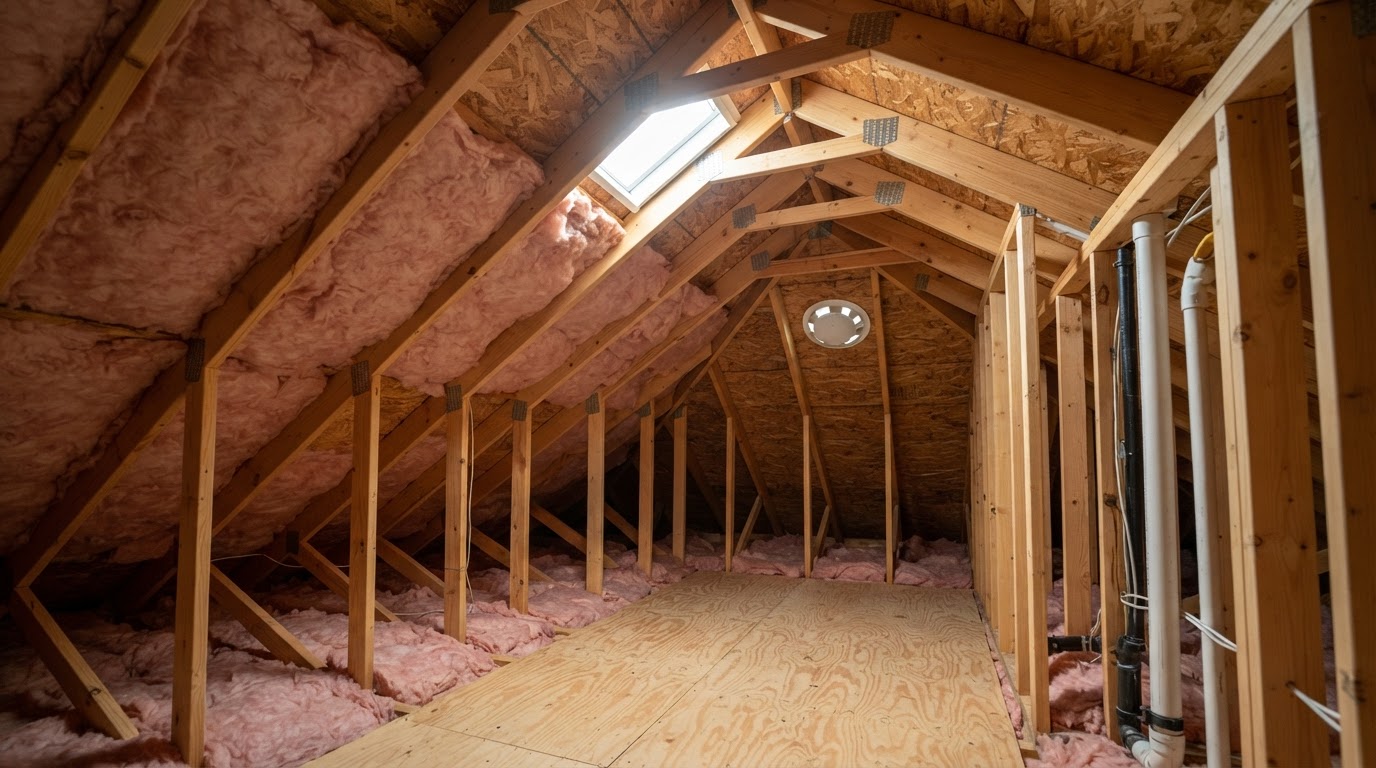
Attic mold is one of the more common findings during a Gettysburg-area home inspection, and it often surprises homeowners because nobody spends time in the attic to notice it. The good news is that attic mold is usually a ventilation and moisture problem more than a contamination crisis, but it still needs to be addressed properly — not just wiped down and forgotten.
What causes attic mold
The root cause is almost always warm, moist air meeting a cold surface. In Gettysburg's cold winters, warm air from the living space below rises into the attic and condenses on the cold underside of the roof sheathing. If the attic isn't vented well enough to clear that moisture, the sheathing stays damp long enough for mold to take hold. Bathroom or dryer fans that vent into the attic instead of through the roof are a frequent culprit, as is inadequate insulation that lets heat escape upward.
Why it shows up at inspection time
Because attics are out of sight, mold there often grows quietly for months or years. It's commonly first spotted during a pre-sale inspection, which is why so many Gettysburg homeowners encounter this issue in the middle of a real estate transaction. Dark staining on the roof sheathing around nail tips or near the eaves is a typical sign.
Removing the visible mold without fixing the ventilation or the moisture pathway means it will return. The remediation only holds if the attic can stay dry afterward.
What proper remediation involves
Proper remediation means addressing the moisture source first — correcting venting, sealing air leaks from below, and making sure insulation isn't blocking soffit vents — then removing or cleaning the affected sheathing and verifying the space dries out and stays dry. In cases where the sheathing is heavily contaminated or soft, replacement may be the more practical option. For the full step-by-step process, see our main guide to mold remediation in Gettysburg, PA.
More From the Blog
Identifying Mold
Mold vs Mildew: How to Tell the Difference in a Gettysburg Home
Mildew is a surface fungus you can often clean yourself; mold penetrates materials and usually needs remediation. Here's how to tell them apart — and why the moisture source matters more than the name.
Read morePrevention
Using a Dehumidifier in a Gettysburg Basement: What Actually Helps
A dehumidifier is one of the most useful tools for keeping a Gettysburg basement dry, but it's not a cure-all. Here's how to size one, set the right target, and know when it isn't enough.
Read moreLooking for the full guide? See our mold remediation Gettysburg PA homepage, or contact us with a question.